
How to Check for Toy Recalls: Match the Model Number
This post contains affiliate links. As an Amazon Associate, we earn from qualifying purchases.
To check for toy recalls, match the identifying number printed on the toy against the official notice, then follow that notice’s exact remedy. Mattel’s own recall list covers only notices announced since August 4, 1998, so anything older runs through recalls.gov. A no-match result means the search didn’t confirm a match, and nothing more.
The identifying number is where the whole check holds or falls apart, and it’s the same identifier the CPSIA rules require on children’s products. Get it right and the notice tells you exactly what to do with the toy in your hand, whether the hazard is a loose magnet or lead paint. Get it wrong and you’ll spend your evening comparing a photo to a product that was never covered, instead of spotting toxic toys by their actual identifiers. Knowing how to check for toy recalls starts with that number.
What follows is the order I use for how to check for toy recalls: find the number, search the right list for the right era, read the notice for its specific hazard, and leave a note so the next person doesn’t start from scratch.
Key Takeaways
- Search the number, not the name. The toy your kid calls “the puppy thing” has a model number stamped somewhere, and that string is what a notice matches on.
- Mattel’s list starts August 4, 1998. Anything announced before that date isn’t there, and a Mattel-only search will miss it entirely.
- An empty result confirms nothing. No match means your query didn’t confirm a match.
- Remedy details change. CPSC says remedy data may shift daily as a company’s operating status changes.
- Write down what you checked, and when. A dated note with the notice link turns a guess into a record.
Start With the Number Printed on the Toy, Not the Name You Call It
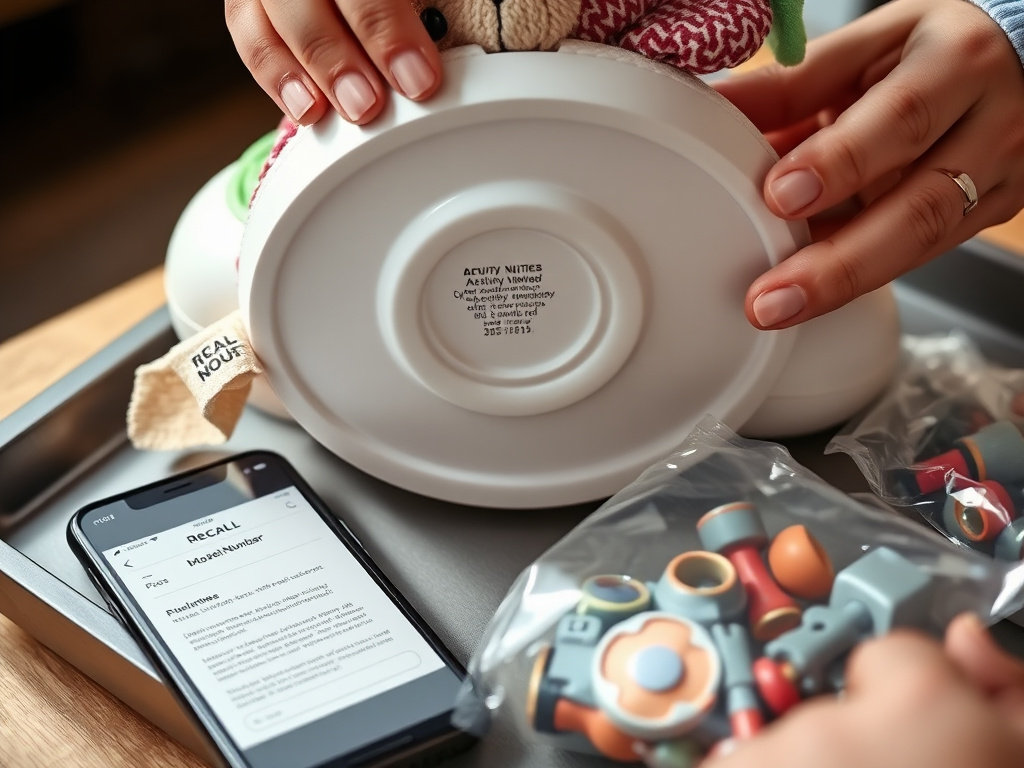
The Fisher-Price SnugaPuppy 3-in-1 Activity Center carries model number HLV78, and that string is the only thing tying a specific toy to the April 10, 2025 recall of its tissue box component. Names drift. Numbers don’t.
Recall notices define affected products through identifiers rather than photographs. Model numbers, date codes, and UPCs are the details regulators and manufacturers use to draw the boundary around a recall, which is why a notice’s description and identifier field carry more weight than a product image, and why a visual match alone never closes the question.
Before you start: A recalled toy is still a hazard while it’s in your hands. Swallowed button cells and coin batteries cause internal chemical burns and death, so work over a tray instead of the floor. High-powered magnets that come free can lodge in the digestive system and cause perforations or blockage, so bag loose pieces the moment they detach.
Where Mattel and Fisher-Price Print Their Product Numbers
Mattel’s own guidance is specific. Product numbers appear in small print near the brand stamp, on the fabric tag, or etched into the product.
Three locations for one brand’s line tells you how much the answer varies by manufacturer, and why how to check for toy recalls starts with the same hunt for a number.
| Where You’re Looking | What’s Usually There | Treat It As the Model Number? |
|---|---|---|
| Small print near the brand stamp | Mattel and Fisher-Price product number | Yes |
| Fabric tag on soft goods | Product number on plush and cloth | Yes |
| Etched or molded into the product | Number pressed into the plastic | Yes |
| Back of the packaging | Model number, as with TooyBing TB-MZWJ | Yes, when the notice says so |
| Number beside the barcode | Not automatically the model number | Only after you confirm it |
Why the Number Next to the Barcode Isn’t the Model Number
Toy Compass, a toy-safety reference site, warns that a number sitting beside a barcode should not be assumed to be the model number. That’s an easy mistake to make and a bad one to act on.
Where Toy Recall Information Actually Lives
Mattel’s online recall list begins on August 4, 1998. Anything announced before that date isn’t on it, and Mattel says so on the page.
The federal side works differently. current CPSC recall notices cover all consumer products and refresh weekly, which makes the CPSC database the broader net. Mattel’s list covers recalls and safety alerts announced since August 4, 1998, and the Mattel and Fisher-Price recall list is where I’d start when you already know the brand.
- The CPSC recalls page, which covers every consumer product under the agency’s jurisdiction and refreshes weekly.
- Mattel’s own
Frequently Asked Questions
What if the toy has no visible model number or the label has worn off?
Check the packaging, the instruction booklet, and the underside of the main body before giving up. Many toys repeat the identifier on a sewn tag, a molded stamp, or a battery compartment sticker. If nothing survives, photograph the toy and contact the manufacturer directly with the purchase date and retailer.
Does a recall notice always mean I get a refund?
No. The remedy is set by the specific notice and can be a repair kit, a replacement part, a substitute product, or a refund. Some remedies are partial, and a few require you to ship the item back at your own cost. Read the remedy section before assuming cash back.
How long should I keep checking a toy after I buy it?
Recalls can be announced months or years after a product leaves shelves, so a single check at purchase is not enough. Recheck whenever you see a news alert about the brand, and again before passing the toy to a younger child. A dated note of your last check tells you when to look again.
Can I still use a recalled toy if the hazard seems minor?
Stop using it and follow the notice, even when the defect looks trivial. Hazards like small detachable parts or excessive lead content cause harm that is not obvious in daily play. Continued use also forfeits your remedy if the company requires the item in its original condition.
